Spring 2025
Instructor: Professor Frederick Stern (frederick-stern@uiowa.edu)
TA: Christian Milano (christian-milano@uiowa.edu)
Time/Location:
TTH, 12:15 – 1:30 PM 2133 Seamans Center
TTH, office hours after class 223c IIHR 5-5215
Or by appointment
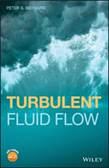
Texts: Turbulent Fluid Flow, Peter S. Bernard, Wiley

Course Description
Turbulent flows are without doubt one of the most important and challenging topics in fluid mechanics due to the difficulties in mastering its conceptual and mathematical physics complexities, all of which are intimidating to those who wish to gain expertise in the subject. The goal of Turbulent Flows is to guide the students through the theory and its application to canonical flows whereby they attain competency for industrial practice and/or academic research. The theory covers averages, correlations, and spectra; turbulent flow equations; scales of turbulence; isotropic turbulence; and turbulent transport and its modeling, including detailed mathematical derivations and physical interpretation. The applications include free shear flows. channel and pipe flows, and boundary layers. The students will conduct a hand-on class project by which they will use IIHR towing tank 4DPTV time series data [1, 2] (Fig 1, class web site) to construct their own macro and micro scale analysis via velocity FFTs; autocorrelations (Fig 2, class web site) and their FFTs; Taylor frozen turbulence hypothesis; energy, Kolmogorov, and model spectrums (Fig 2, class web site); and anisotropy analysis, including Lumley triangle and Reynolds stress ellipsoid (Fig 3, class web site). The textbooks are “Turbulent Fluid Flow” by Peter S. Bernard, Wiley, and “Turbulent Flows” by Stephen B. Pope, Cambridge. The prerequisite for the class is introductory and intermediate level fluid mechanics courses. Students are graded based on their class project and homework assignments. The class website is used for lectures and provides all the class material needed other than the textbooks.
Yugo Sanada, Zachary Starman, Shanti Bhushan, and Frederick Stern, “4D particle tracking velocimetry measurements of unsteady 3D vortex onset and progress for 5415 straight ahead, static drift and pure sway,” Physics of Fluids, special collection Recent Advances Marine Hydrodynamics, editors pick, Vol. 35, Issue 10, 105125 (2023).
Frederick Stern, Yugo Sanada, Zachary Starman, Shanti Bhushan, Christian Milano, “4DPTV Measurements and DES of the Turbulence Structure and Vortex-Vortex Interaction for 5415 Sonar Dome Vortices,” 35th Symposium on Naval Hydrodynamics, Nantes, France, 7 July - 12 July 2024.
Syllabus, Assignments and Grading
Syllabus is attached below, and the class schedule follows the syllabus including dates for lectures, reading and homework (HW) assignments, class project and exams. Final grade is based on HW (100) + class project (200) + exams (200) = 500 total points. Class project grading: technical quality 75%; organization and presentation 25%. Exams are open textbooks only.
Syllabus
Chapter 2 (Averages, Correlations and Spectra)
Chapter 3 (Turbulent Flow Equations)
- Part 1: Instantaneous Equations
- Part 2: Reyolds-Averaged Navier-Stokes Equations
- Part 3: Mean and Turbulent Kinetic Energy Equations
- Part 4: Dissipation Rate, Reynolds Stress, Mean and Fluctuating Vorticity and Enstrophy Equations
Chapter 4 (Scales of Turbulence)
- Part 0: The Energy Cascade and Kolmogorov Hypotheses
- Part 1: Spectral representation of e
- Part 2: Consequence of Isotropy
- Part 3: The Smallest Scales
- Part 4: Inertial Subrange
- Part 5: Relations between 1D and 3D spectra
- Part 6: 1D Spatial and Time Series Spectra
- Part 7: Analysis of Kolmogorov Spectra
- Part 8: Structure Functions
Chapter 5 (Isotropic Turbulence)
- Part 1: Energy Decay
- Part 2: Modes of Isotropic Decay and Self-Similarity
- Part 3: Equation for Two-Point Correlations & Self-Preservation and the K-H Equation
- Part 4: Energy Spectrum Equation
- Part 5: Energy Spectrum Equation via Fourier Analysis of the Velocity Field
- Part 6: Limitations, shortcomings, and refinements
Chapter 6 (Turbulent Transport and its Modeling)
- Part 1: Molecular Momentum Transport
- Part 2: Lagrangian Analysis of Turbulent Transport
- Part 3: Homogeneous Shear Flow
- Part 4: Vorticity Transport
Chapter 7 (Free Shear Flows) - Bernard
- Part 0: Coherent Structures
- Part 1: Introduction
- Part 2: Turbulent Wake
- Part 3: Turbulent Jet
- Part 4: Turbulent Mixing Layer
Chapter 7 (Free Shear Flows) – Pope
Chapter 8 (Channel and Pipe Flows)- Bernard
Chapter 8 (Channel and Pipe Flows)- Pope
Chapter 9 (Boundary Layers) - Bernard
Chapter 9 (Boundary Layers) – Pope
Chapter 10 (Turbulence Modeling)
- Bernard
- Pope